Family-Style Catering
Designed Thoughtfully. Crafted Lovingly. Presented Beautifully.®
Recommended Family-Style Menus
Family-Style Catering
Family-style service at important events originates directly from imperial hospitality at state dinners. At Versailles it was called service à la française: a table set with a full range of dishes at once, abundance offered as a display of the host's standing, and each guest free to choose across the variety, whether they reached for a dish or had it brought to them. The instinct was never only French. The Russian imperial court served its abundance in succession, course after course carried to the seated guest. The Qing emperors' Manchu-Han banquets ran past a hundred dishes across days, staged to bring Manchu and Han guests to one table. The Mughal dastarkhan spread forty dishes and more before the court of Akbar, shared from common platters. Different rooms, one principle: a wealth of dishes set before the guest, and the honor of choosing among them.
It was never a single way of serving, either. The shared table where guests help themselves is only one mode. Courses were carried and portioned table-side, offered around the table one by one, or brought through the room and chosen as they arrived. What held these together was not the mechanics of the service but the scale and the choice: a Delhi sultan's table was recorded at two hundred dishes, a Qing banquet counted past three hundred, and even a working court dinner set out dishes in a number no plated menu would attempt, precisely so that a room of different people, tastes, and traditions could each find something to enjoy and that might match a preference or familiarity.
Modern family-style draws on this same concept of abundance, choice, and service. Strip away the court and the principle is exactly what a room of varied guests still needs: more than enough, real variety, and the grace of letting each person choose, delivered to the seat rather than fetched from a line. A generous, varied, well-served table lets every guest find their own.
Catering Formats
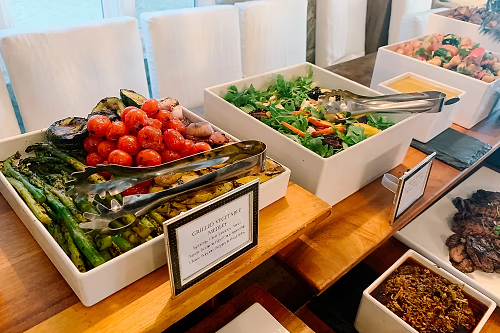
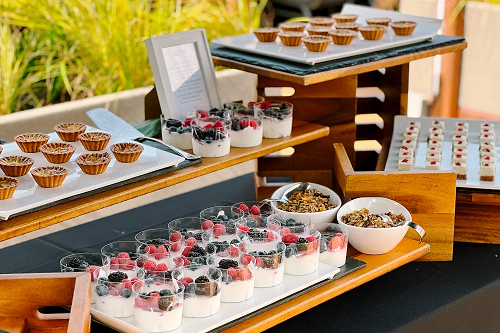
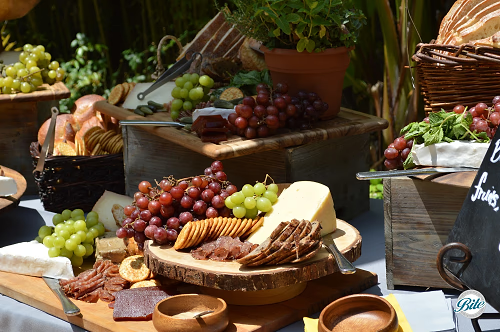
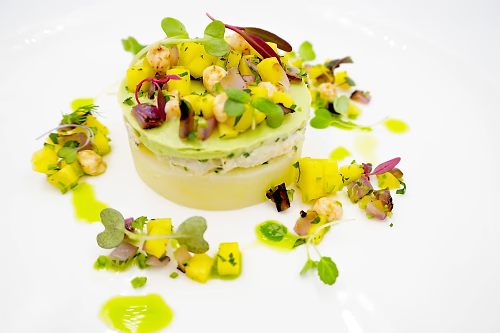
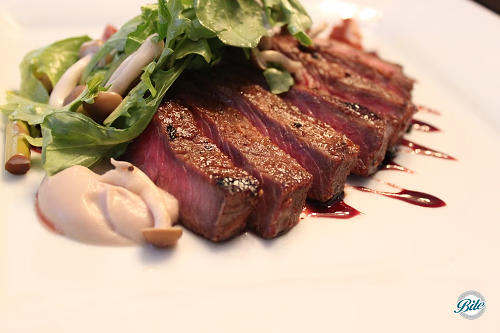
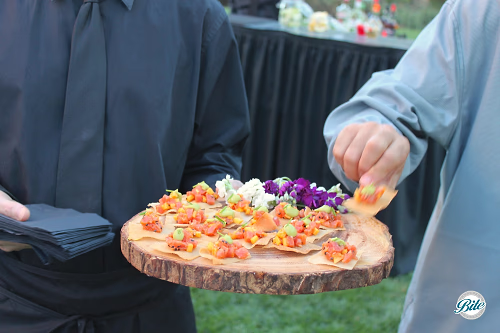
What family-style catering means at Bite
We build family-style catering for weddings, corporate galas and holiday parties, and social celebrations across Los Angeles, from Malibu lawns to the ballroom at 440 Elm. The format is simple to describe and hard to execute well: a run of dishes brought to a seated table across the meal, generous enough that nobody feels rationed, varied enough that a mixed room finds what suits them. What separates a premium version from a casual one is service. Our staff present and portion, replenish before a platter runs low, carve and finish courses tableside, and keep the table looking abundant from the first dish to the last. The food comes to the guest. The guest never gets up.
That last point is the line between family-style and a buffet, and it holds across every way we serve. A buffet sends the guest to a station to stand in line. Family-style, in all its forms, brings the food to the seated table and leaves the choosing to the person in the chair.
Recommended Menus
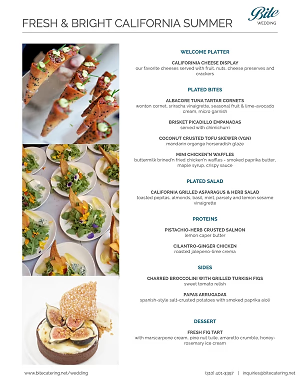
Download PDF: California Fresh
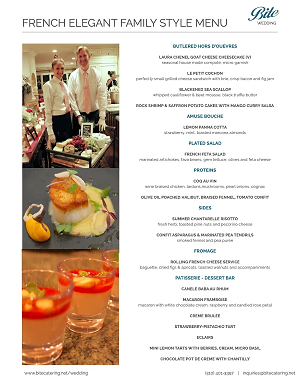
Download PDF: French Wedding
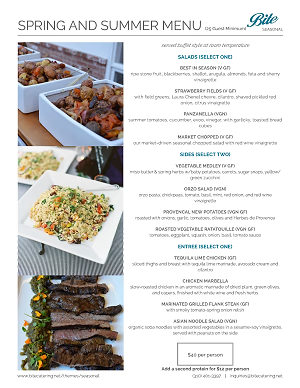
Download PDF: Seasonal Family Style Options
Download PDF: Middle Eastern
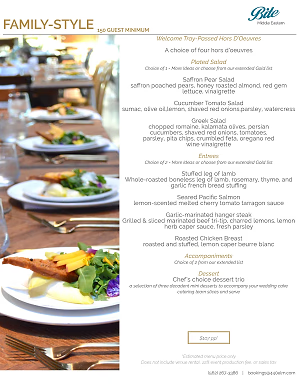
Photo Gallery
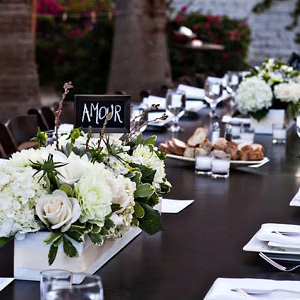
Wedding Table Setting
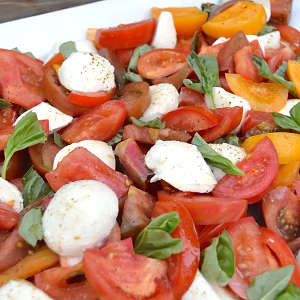
Caprese Salad
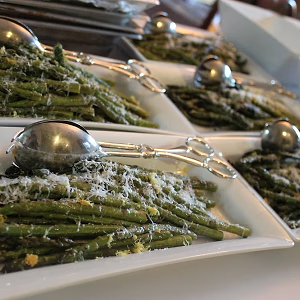
Asparagus Family-style
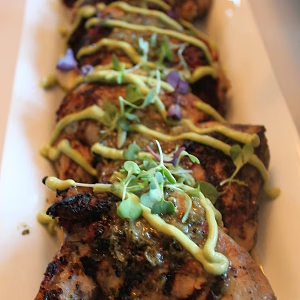
Chicken TBD - Familystyle
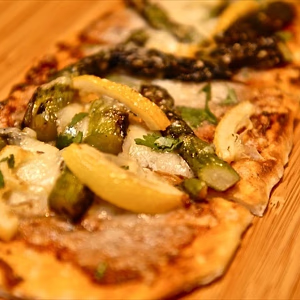
Roasted Vegetable Flatbread
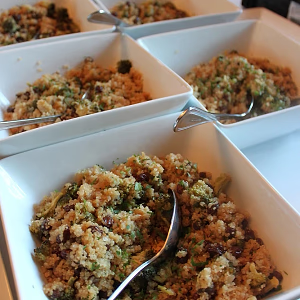
Quinoa Salad Family-style
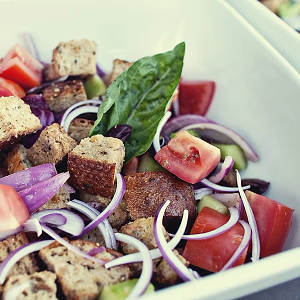
Family Style Panzanella
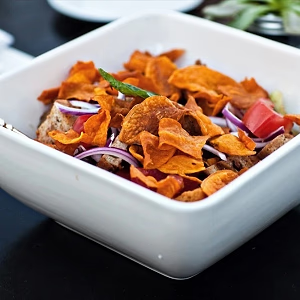
Panzanella Salad
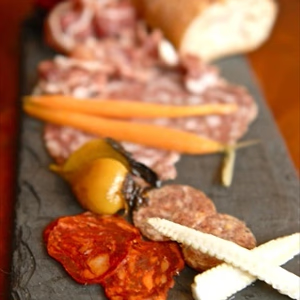
Charcuterie plate (tapas)
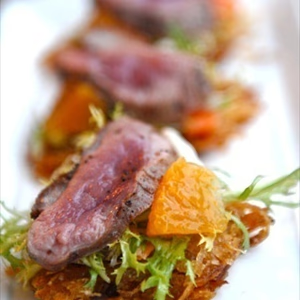
Asian duck pancakes
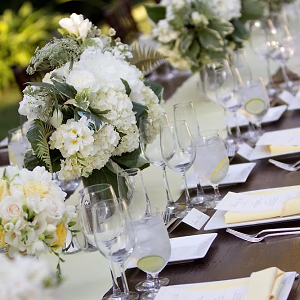
Gorgeous summery locally-sourced arrangements for a family-style reception dinner
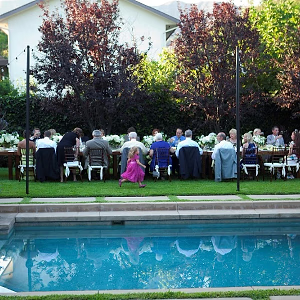
Intimate family-style wedding reception - One long table!
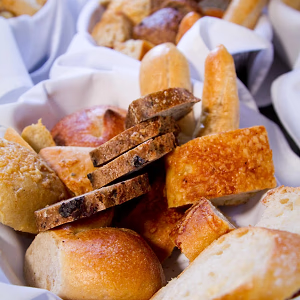
Bread Basket
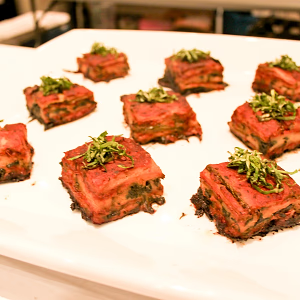
Lasagna
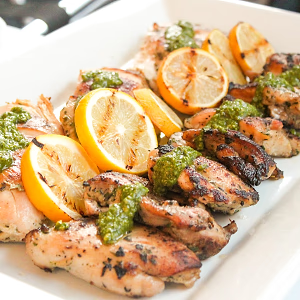
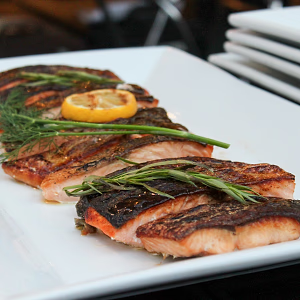
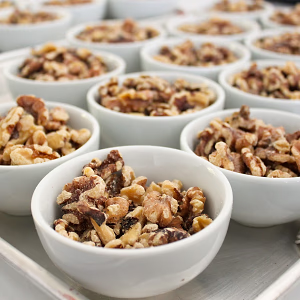
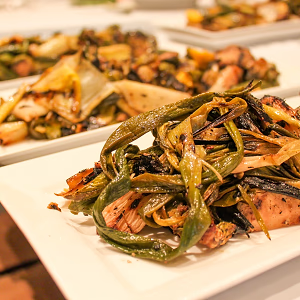
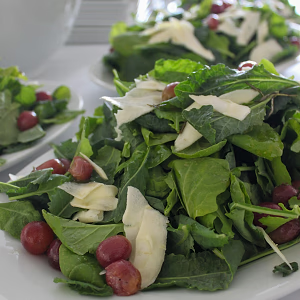
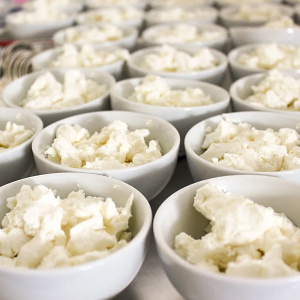
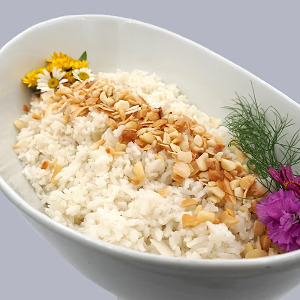
Coconut Rice
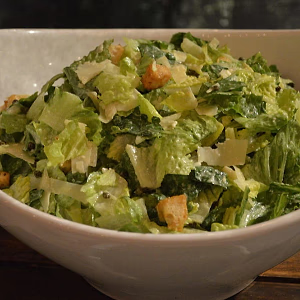
Caeser Salad in Bowl
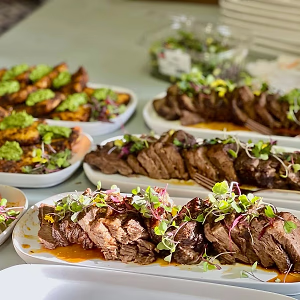
Family-style formats for catered events
Family-style is a family of formats, not one. Most of the events we design use two or three of these together, matched to the room, the timeline, and the feeling you want.
Shared platters
The mode most people picture. Platters and footed bowls are set in the center of the table, and guests serve themselves and pass. It reads as generous and relaxed, and it gets a table of near-strangers talking within minutes, because passing a dish to the person next to you is the oldest way there is to stop being strangers. The serveware is part of the design here: the platters and risers are on camera all night, so we choose pieces that carry the portions, pass without a wrestling match, and match the look of the room.
Tableside and circulated courses
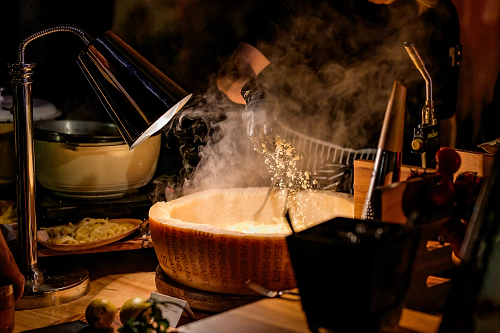
The staff-forward mode, and the one that carries the most polish. Courses are portioned or carved tableside and offered around the table one guest at a time, the lineage of the silver-platter service that has always read as formality and generosity. This is where a whole roasted protein, a carved prime rib, or a course finished at the table becomes the centerpiece of the moment rather than a plate that simply arrives. It keeps the guest seated and served, with the abundance and choice of family-style and the ceremony of fine dining.
Cart and continuously-offered service
The dim sum model, brought to an event. Selections move through the room and reach the table across the meal, chosen as they arrive rather than decided in advance. It suits a longer, more social evening, and it delivers the breadth of a tasting menu without a fixed sequence: a guest samples widely, at their own pace, from a range that keeps changing. It is also the mode that most naturally lets a mixed room self-select, since every guest chooses each dish as it comes to them.
Choosing and combining modes
Few events use one mode alone. A plated first course can open into shared platters for the mains. A tableside carving can anchor a table that is otherwise serving itself. A cart can run late into a social evening after a seated dinner. We design the combination around the room, the kitchen infrastructure, and the guest experience you are after, and we confirm the practical details early: tableside carving needs power and clearance, shared platters compete with tall centerpieces for space in the middle of the table, so we work with you and your florist before anyone commits to a plan that leaves nowhere for the food to land.
Family-style for Popular Events
Family-style for weddings
The aim at a wedding is connection across a room that has never all been together before: two families, two friend groups, tables seated by a chart rather than by choice. Family-style is tuned for exactly that, because a shared table gives strangers a reason to talk within the first few minutes.
The guests set the mode. A seated dinner where both families are meeting favors shared platters or tableside courses that keep everyone at the table and talking, rather than cart service, which suits a more mobile, later-evening crowd. Guest count shapes the build: under roughly a hundred, long-table shared service reads intimate and generous; above that, per-table platters with tableside carving as the centerpiece hold the abundance without slowing the room.
Logistically, three things drive a wedding family-style plan. Table size and centerpiece height, because platters and tall florals compete for the same space, so we set that with your florist before the floral plan locks. Service ratio, because staffed family-style runs richer than a buffet to keep platters full and hot, and that staffing is what separates it from a self-serve line. And pacing, because tables eat at their own rhythm, which lengthens the dinner window and softens the transition to the dance floor, something we time with your planner rather than leave to chance.
Family-style for corporate galas and holiday parties
The aim of a corporate dinner is to get a room that works together during the day to actually connect at night, across reporting lines and departments that rarely mix. Shared service does work a plated dinner can't: passing platters and offered courses give colleagues a reason to engage, which is the point of bringing everyone together after a year of hybrid schedules.
Guest needs vary by the kind of event. A holiday party wants energy and momentum, so a shared or circulated build that feeds the room efficiently keeps time for the program, the toasts, and the dance floor. A gala or foundation dinner wants polish, so tableside and circulated courses carry the warmth of family-style without giving up the ceremony the evening is selling. Mixed rooms with varied preferences self-select from the abundance rather than being locked to an entrée chosen weeks out on an RSVP.
Two logistics decide a corporate plan. The clock, because a program with a hard start means the pacing can't be left to the table's own rhythm, so we build the service around the run of show rather than around the meal. And the register, because the most formal black-tie galas and award dinners often default to plated for its synchronized ceremony, and family-style earns that room only when it's run with the staff-forward modes above. We've catered at this level for clients like Pinterest, L'Oréal, and Microsoft, and for rooms with real security requirements, so shared service stays generous and controlled at once.
Family-style for social celebrations
The aim of a social celebration, a milestone birthday, an anniversary, an engagement dinner, is a long, unhurried meal where the host is a guest at their own party rather than a line manager. Family-style is built for that: the food keeps arriving to the table, so no one gets up and the host isn't running a station.
Guest needs here run on preference and pace. These rooms usually hold varied tastes, and the wide, self-selected table lets everyone eat what suits them, including guests eating vegetarian, keto, or gluten-free by choice, without a separate plate singling anyone out. A more social, mingling evening leans toward cart and continuously-offered service, which keeps people moving and grazing; a seated celebration leans toward shared platters and tableside courses.
Logistically, social events scale the widest, from a dinner for twenty in a backyard to a few hundred across an estate, and the mode and staffing scale with them. Smaller gatherings carry long-table shared service; larger ones need per-table platters and added staff to keep every table replenished at once. Home and non-traditional venues also shape the plan, since kitchen infrastructure, power, and space for tableside work all get confirmed early rather than assumed.
Let's build your table
Tell us about your event, the guest count, the venue, and the feeling you want at the table, and we'll figure out which family-style modes fit and how to build the menu around them.