Hidden Cost of Lunch Catering
THE HIDDEN COST OF LUNCH
How a Catering Decision Can Derail a $2M Strategy Session
The meeting took six months to set up.
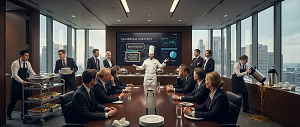
A $2M McKinsey engagement. Three months of internal modeling. Fourteen decks. Two pre-read packages. A board that cleared their calendars—flying in from New York, Chicago, and London. Your CEO rehearsed the presentation twice.
The decision on the table: a $50M acquisition that would reshape the company's next five years.
And then the caterer forgot about the loading dock and security and showed up 20 minutes late, interrupted the CFO mid-sentence to ask where to set up, and served a salad with walnuts to the board member whose allergy was flagged three times.
Nobody said anything. But everyone noticed.
The Math Nobody Does
When companies evaluate catering, they compare quotes. The difference between "good enough" and "premium" might be a few thousand dollars across a full-day board meeting—breakfast, working lunch, afternoon break, maybe dinner if the session runs long.
Feels significant when you're approving the PO.
Here's the math they don't do:
What's in the room:
- 2 board members at $2,500/hr
- 3 C-suite execs at $1,500/hr
- 2 outside counsel at $2,000/hr
- 2 investment bankers at $1,500/hr
- 2 SVPs at $500/hr
Total room cost: $17,500/hour.
Fifteen minutes of disruption—food arriving late, service interrupting the flow, someone leaving to sort out a dietary issue—costs $4,375 in raw time, but took the wind out of a 2 hour ($35K meeting).
But that's not the real cost.
The Cost Behind the Cost
That board meeting didn't just cost $17,500/hour to run. It cost months to arrange.
The work product in that room might represent:
- $1-3M in strategy consulting
- $1-2M in investment banking fees
- $500K-2M in legal due diligence
- 200+ hours of internal financial modeling
- $30-50K in executive travel
- Six months of calendar coordination to get everyone in the same room
When a catering disruption breaks the momentum—when the CEO has to pause her presentation, when the energy shifts from "decision mode" to "who ordered this?"—you don't just lose 15 minutes. You lose the setup.
The decision that was about to happen? It gets tabled. "Let's revisit after lunch." But the room is different after lunch. The urgency is gone. The alignment you spent three hours building has to be rebuilt.
We've seen 8 figure investment decisions delayed by at least a full quarter because the board meeting got derailed and the agenda topic was pushed due to time. The catering wasn't the only reason. But it was the first crack.
What Actually Goes Wrong
It's rarely dramatic. It's almost never a complete disaster. That's what makes it insidious.
The late arrival. Food scheduled for 12:00 shows up at 12:25. The agenda assumed a working lunch during the strategy discussion. Now you're choosing between hungry executives and a 25-minute delay. Either way, you've lost control of the room and its previously energetic tone.
The dietary failure. You flagged three allergies and two dietary restrictions. The caterer said "no problem." But when the food arrives, there's no clear labeling, the vegan option has butter, and someone has to quietly leave the room to find something they can eat. They miss the most important 10 minutes of the presentation.
The service interruption. The caterer sends staff who don't understand the room. They clear plates while the CFO is still eating. They ask questions during the presentation. They treat it like a restaurant instead of a boardroom. The specials are seen
The format mismatch. Boxed lunches at an investor meeting. A buffet line during a working session. Passed appetizers when people are trying to review documents. The food doesn't match the function, and it shows.
None of these are catastrophic. All of them communicate something: whoever planned this didn't understand what was happening in this room.
The Person Who Takes the Blame
Here's the part nobody talks about: when catering goes wrong, the EA owns it.
Event planning is ranked the fifth most stressful job in America. But for executive assistants, it's not even the main job. It's one of 47 things happening that week—between managing calendars, coordinating travel, running interference, and handling whatever crisis landed in the inbox that morning.
The EA didn't have time to vet six caterers, do three tastings, and negotiate service details. They needed someone who would handle it. Instead, they got someone who created a problem they had to solve—in front of the people whose opinions matter most to their career.
No executive complains about catering directly. But they remember. And when performance reviews come around, "attention to detail" and "executive presence" are the phrases that show up.
The savings on lunch isn't worth the sentence: "The board meeting could have gone more smoothly."
What "Good" Actually Looks Like
The best corporate catering is invisible. Not invisible as in forgettable—invisible as in seamless. The food is at the right level for the room. It arrives before anyone thinks to ask. Dietary needs are confirmed and executed without drama. Service is timed to the agenda, not to the caterer's convenience.
When it's done right:
- The working breakfast is set before the first exec arrives
- Lunch transitions happen during natural breaks, not interruptions
- Dietary accommodations are handled so quietly that the person never has to ask
- Plates are cleared when appropriate—not when the staff needs to leave
- The EA's phone stays in their pocket because nothing needs to be fixed
The food isn't the point. The meeting is the point. Catering exists to support what's happening in that room—not to become the thing that happened.
What You Can Do
When vetting a caterer for a high-stakes meeting, ask two questions:
1. "From your experience, what are opportunities for catering to add to a meeting's success? Where can it detract?"
Listen for whether they talk about food or outcomes.
A food-focused answer sounds like:
- "We use high-quality ingredients"
- "Our presentation is beautiful"
- "We have great variety"
A meeting-focused answer sounds like:
- Energy management—what you serve when affects whether the room stays sharp or crashes
- Transition timing—using food to create natural breaks without interrupting momentum
- Invisible service—staff who read the room and know when to stay out
- Dietary precision—so no one has to think about their food instead of the discussion
A menu portfolio designed for different meeting energies
- Not just "options" but a deliberate range that matches the emotional cadence of different events
- Innovative, unexpected food for brainstorms and creative sessions where you want people energized and thinking differently
- Calmer, cleaner choices for technical reviews or focused work sessions where the food shouldn't compete for attention
- Understanding that a product launch celebration and a board risk review need fundamentally different approaches—not just different entrees
- Multi-meal pacing for full-day sessions—knowing that breakfast, lunch, and afternoon break serve different purposes and shouldn't feel like the same meal three times. Morning energy is different from post-lunch focus is different from late-afternoon fatigue. The arc of the day matters.
- A coffee, beverage, and snack plan that keeps people sharp between meals—not just "refreshments available" but a deliberate approach to maintaining energy and focus through the mid-morning lull and the 3pm wall
The red flag is a caterer who answers a question about meeting success by talking about their menu.
The goal isn't impressive catering. The goal is a meeting where no one thinks about catering at all—because everything just worked.
2. "What tools do you have to make our meeting more successful? Are they standard or an upgrade?"
This reveals their service model. You're listening for whether context-awareness is their default or their upsell.
Look for specifics:
Signage and labeling
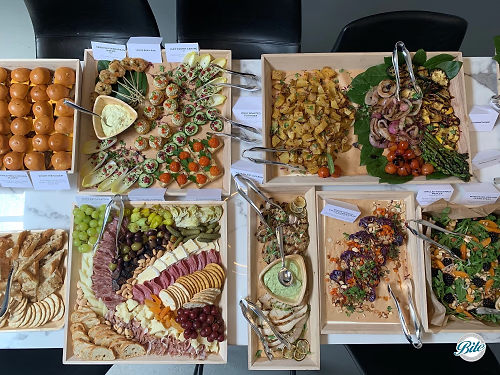
- Clear tent cards that let guests self-identify what they can eat without asking
- Allergen and dietary labels that are visible, not afterthoughts
- Professional presentation that matches the room's tone—not handwritten sticky notes
Menu design that anticipates concerns
- Menus built to address common restrictions by default, not as special requests
- Options that don't require someone to announce their dietary needs to the room
- Food that works for a working meeting—easy to eat, not messy, doesn't require full attention
Equipment designed to work with your office
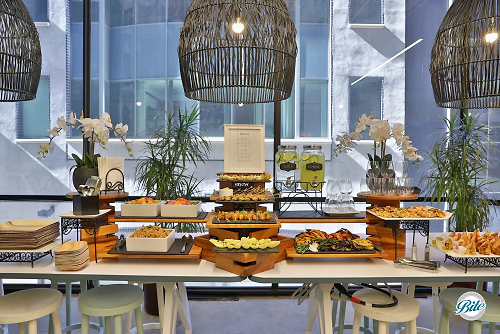
- Serving setups sized for conference rooms, not banquet halls
- Equipment that's quiet—no rattling chafing dishes or loud sterno clicks during the CFO's presentation
- Furniture and serviceware that looks appropriate next to a $10,000 conference table
- Setup that works with your actual space constraints, not equipment that assumes a catering kitchen down the hall
Heating and warming solutions that respect building realities
- Options for buildings that prohibit open flames—because many Class A office buildings do
- Awareness of electrical limitations—knowing that one conference room outlet can't power three heating units without tripping a breaker
- Solutions that keep food at temperature without creating safety issues, fire alarm risks, or facilities management headaches
- The foresight to ask about building rules before proposing a setup that won't be allowed past the loading dock
A caterer who has thought about these details will describe them unprompted. One who hasn't will talk about how they "can accommodate" if you flag concerns in advance.
The tools a caterer invests in tell you whether they've solved these problems before or whether they're going to solve them on your floor for the first time.
The Real Question
The next time you're planning a board meeting, an investor update, or a strategy session, ask yourself:
What's actually at stake in this room?
If the answer involves months of preparation, millions in advisory fees, executive travel from three time zones, and a decision that will shape the company for years—then the catering decision isn't about cost per head.
It's about whether you want one more variable you have to manage, or one less thing to worry about.
The executives in that room will never complain about lunch. But they'll remember if something felt off. And they'll remember if everything felt handled.
That's the hidden cost of lunch. And the hidden value of getting it right.
If you're planning a high-stakes meeting in Los Angeles or Orange County, we'd be happy to talk through your needs
About the Author Vijay Goel is co-owner of Bite Catering Couture, which caters hundreds of corporate meetings annually in Los Angeles and Orange County. A former McKinsey consultant and X PRIZE executive, he's sat on both sides of the table—and has experienced firsthand what happens when catering derails a high-stakes C-level meeting with executives and advisors.
By: Vijay Goel -- Jan 2, 2026